

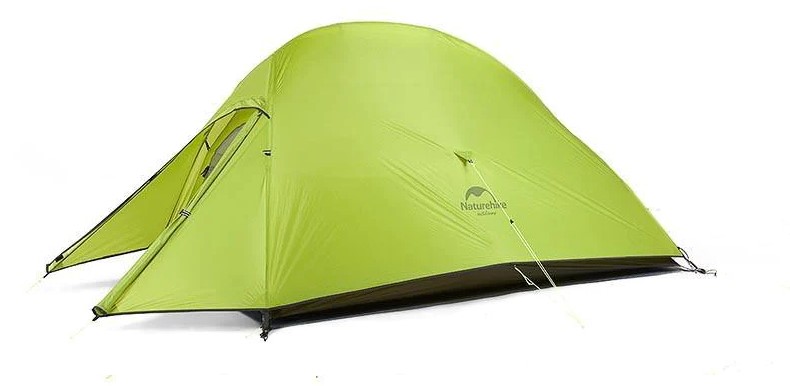
There are two primary synthetic materials to evaluate when selecting a quality tent: Nylon and Polyester. In product specifications, fabric ratings are typically expressed as 10D or 20D for Nylon (where “D” stands for Denier) and 210T or 230T for Polyester (where “T” stands for Thread Count). These ratings directly dictate how tough, heavy, and inherently waterproof the shelter’s canopy will be.
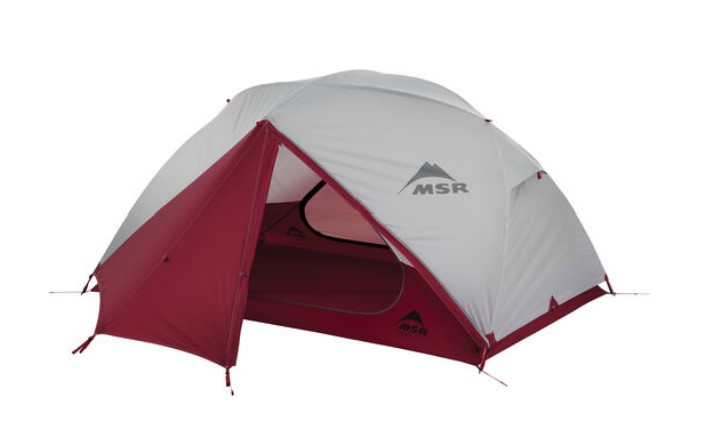
While both 20D Nylon and 210T Polyester fabrics are fully waterproof, nylon is fundamentally lighter and offers superior water resistance for its weight. It can typically withstand a significantly higher water column pressure compared to polyester of an equivalent thickness. For example, most manufacturers rate 20D Nylon up to 4000mm of water pressure, whereas 210T Polyester resists around 3000mm — despite the polyester fabric being substantially thicker.
Nylon vs. Polyester: Performance Matrix
| 🟢 Advantages of Nylon | 🟡 Advantages of Polyester |
|---|---|
| Lighter & Stronger: Offers double the tensile strength of polyester for the exact same fabric weight. | Cost-Effective: Generally more affordable than nylon alternatives, making it great for tighter budgets. |
| Superior Weather Resistance: Delivers higher rain resistance and easily handles greater water column pressures. | No Wet Sagging: Maintains its drum-tight structural shape and baseline strength perfectly when thoroughly wet. |
| Easy Maintenance: Highly pliable, effortless to wash clean, and highly receptive to vibrant color dyes. | Highly Durable: Naturally fast-drying with low moisture absorption, excellent abrasion resistance, and low risk of shrinkage or wrinkles. |
| — | UV & Heat Resistance: Resists breakdown from prolonged exposure to harsh sunlight and outdoor UV radiation. |